Wednesday, March 21, 2007

Wisdom

photo by Steve Kye
I read in an email newsletter today an offer for one of Brian Tracy's programs. Here is a quote that stays with me,and is forever true:
"In fact there is nothing more dangerous than learning from those who share only opinions rather than experience."
Thank you, Brian Tracy, and all others who remind us so well.

Tuesday, March 20, 2007

Sunlight


When I read Brent Staples’ City Life editorial (“A Little More Sunlight”) in the NY Times yesterday, I was in it from the first sentence: “A tree trunk shattering in the wind can sound very much like a lightning strike.” I’d been thinking of the meandering paths minds take through history, through a day, every spark and eruption mine had had since my first sip of coffee. He wrote how the wind had accomplished in a few seconds what he’s been trying to accomplish in his garden plot for 10 years. I almost laughed out loud. The attention they paid to damp, shaded life, the nurturing of roots, the patches of light – how profoundly intimate and scrabbling such tending is.

I am listening to the birds in this springtime thrust, and thinking of earth. As I mentioned to a friend recently, this deep sense I feel of “coming home” is new to me. Maturation, times spent on Earth and a sense of it, is a part, and each spreading ripple of thought I feel from my beginnings, our beginnings, the clouds as thoughts. I will forever be a “tender of select things” – my neglect of others is simply an admonishment, a reminder, of all there is to celebrate. The leaves I see moving in the breeze, the quick flash of yellow which disappears, the way one inked word winks at me from a page, such as “Sunlight.” Happy scented spring.

Thursday, March 15, 2007

Thoughts on Hidden Memories; Notes from Sharing


Notes from Sharing: Self Discovery in Relationship by Kathy Oddenino
Thoughts on Hidden Memories


“Our growth as individuals, families, communities, cultures, the world, and the Universe is controlled by our ability to gain insight into the lesson of the experience of sharing. We are a complex network of interwoven energy which we share consciously, subconsciously, and unconsciously. This is true in all aspects of our lives from the most dramatic event to the common-place, daily life experience. The experiences of life are understood relative to the image or vision projected by the conscious mind into our life activities.” (x)

“Truth is the living spirit of consistency between the thoughts of man, the words of man, and the actions of man. We live truth when we are no longer afraid to acknowledge, accept, respect, and value the consistency from the moment of inspiration to the moment of creation.” (x)

Our first relationship is with ourself. Living truth means that we “know who we are.” We “Know Thyself.” If we create confusion and conflict within our mind by not being truth, we will create depression, anger, fear, denial, and resistance within ourself and our life. We will create an internal climate within ourself of confusion, of not being able to understand what we want. This confusion is the result of inconsistencies between our internal thoughts and feelings, and our external words and actions. This inconsistency of internal thoughts and external words is the beginning of untruth. Chances are the actions that follow these words will also take a different path. When your actions are not consistent with your words, you create another level of untruth, conflict, and confusion. (xi)

As individuals we create according to our inner truth being balanced with our external truth. Our external truth is subjected to a belief system that has been created by the ego.

“My own experience of self-discovery has been in motion since the day that I was created. My truth is creating total consistency between my thoughts, my words, and my actions.” “By seeing the opposites, I can define the opportunity to change. “ (xiii)

Accept, understand, and use the vibrational energy of your consciousness.

“When you use your soul memory, you are motivated from the memory of past lessons. When you use your spirit energy you are inspired by love, truth, and perfection. If you integrate your inspiration and motivation with your intellect, you will create with the power of the Creator.” (11)

Thinking about hidden memories and the ways these multiple levels of energies interact and are interwoven within us helps me to recognize the patterns of my personality that I have created and which ones I use and why. I have lived this duality of “tough and tenderness” all my life, because this duality was what I wanted to heal in my mind – this belief in separation, and the hostility between my male mind and the female loving emotions that I revered and felt, deep within, but had not reconciled with, truly accepted without trying to control.

"Your inherent birthright is your power of creation through the positive energy forces of love, truth, and perfection." (20)

Do you fear acknowledgement and acceptance of the soul and spirit within you?
I see better and better what the opening of a mind means, what this means to me, in this life. I see visions of the evolution of physical images, like the cells forming into shapes, the shapes forming into “apes,” into men, rising from clusters of cells into trunks, limbs, crawling to walking. I see how the images projected onto cave walls came to us, how we saw the shadowy shapes, tried to regain the memory of where the shapes came from, from the “ether” of our memory, how we are still trying to do that in different ways, with different tools.

As I think about Neural Depolarization and the power of this healing that is designed within us, I think about the reality that “we are energy first.” Understanding the energy of us as the energy of the Universe pulsing within us, and the “microchips” of thoughts are our dreams-coming-true or whirling into another form, dissipating, changing. When I think about the memories, or energy streams, that have come to me so strongly through my life, I am finally coming to terms with them – i.e., opening to them as “me,” as energy, not as an identity stream but as the flow that moves and helps me define myself and my passions, the passion of living. Each personality I see the stream reflecting “for” me today: CS, with that haunting image of the females in her family, especially the “mothers,” seeking freedom in a strictured environment, leaping from windows, the haunting energy of war as a backdrop, and the creative juices of drawing, of longing for love, and the love of ideas stimulating a mind even as the pontificating ego of her intelligent man-friend distracted her and seduced her with her need “to be loved”; GB and his wild and willful mind that had its sharp edges in its thrusts of inspiration and ideas, his impatience and restlessness with “moving on,” to the next idea, the next town, even the next impulse and urge to defend himself, to find “the truth!”; SW, her "gravity and grace,” the need to find the truth too, the need for answers to her questions, her absolute devotion to thinking, to the sharp thrill of thinking, and the restless thought that she was only a shadow compared to a mind like her brother’s, much as she loved him, and that this shadowy sense of “what is it,” where is the mercy, compassion, justice, truth that is substantial and not shadowy, haunted her. This character Blake, well, what to say about Blake, and this energy of, again, the sharp thrill of cutting and waxing, sealing, coloring, the softening of the edges of sky, of fingers reaching to the sky, skin blending into sky colors, the earth shapes molding into the human forms as naturally as the hand of “God.”

When I think of these streams and their prominence in my thinking mind energy’s fingering, playing with, touching, wondering, I feel other levels of my mind opening, I feel my fingers opening to touch other crevices, wisps, the energies of each thought opening, each thought opening into words, the vortexes that open infinitely into more.

Now it is time for this flowering, this opening of my mind just to love, to be. Now I am sensing the strength of an older man, a smiling man, sitting with his elbows on his knees, palms open, explaining something to a listener who sits across from him, a friend – everyone is a friend. He is partly bald, calm, comfortable, neatly dressed, open necked shirt. Yet this is an “old” image, not a modern one. It is a blending of energies together, like a coming together of a lot. Perhaps this is part of the healing of some of these religious association-images, such as the one early in my life that was solidified by the Bible-toting Texas preacher who visited us in Nigeria, and I had the series of images then of big rings, big hands, dangling crosses, long skirts swishing. This breeze has a much different energy, a spring breeze with the casual scent of flowers. I feel the skirt, filmy, flowery, yet covered by a long soft linen shirt, open, free, and hair easy, long, dropping bits from clips. I’m leaning over the edge of a bed, brass bedposts, gleaming chrome, a soft rug, I am smiling, the left over lingering of a smile. Someone has just left the room, and it was a smiling moment. These are opening moments, I am leaving the sharp edges behind, and feeling the flow of forever.

It is no wonder we become so confused by what we sense that we cannot identify as “fact.” Our mind is dependent upon fact-checking, and yet what do we create our facts to do? With each moment we may feel the power of love, that we are made to create with this energy of love, truth, and perfection. We must learn enough to know what truth is, what this cycle of consistency, of stability, of change means to us as a mind, and a sensory being in constant motion and change.

Vaudeville? Flappers? Driving a Rolls-Royce down a tree-lined drive in early Spring? Guiding a rickshaw before they were cool through a crowded street in a town that has changed names several times just in your lifetime? Standing under a shower on a Caribbean island, the shower head attached to the side of the wood house, the blue ocean a dazzle that goes on and on even after you close your eyes and you know it will stay that way forever in your mind. Tap shoes that tip black, then blue, then brown, the polish a high luster that is only matched by a fine car rubbed clean or a smile that is as bright as a light. Then feathers, chickens squawking, children laughing as you run around the dirt yard trying to catch the bird, laughter loud as the roar of the soccer fans you can still hear in your ears from that first game so long ago.

Go much further and feel the flow of ideas that come with a wooden chalice lifted from a long table, reclining and full of the wine of ideas and laughter and the distant memory of food. Go further again and feel the smile that comes through tears as a mother waves a son off from home, the tears that become a flood when that sending is to war. Each teardrop has its own makeup which reflects the lake that we remember from every myth we have ever heard, every hope.

Wednesday, March 14, 2007

My Friend Ric


http://ricconnstudio.mysite.com/
Check out my friend Ric Conn's paintings. I like this one.

Tuesday, March 13, 2007

Howard and Peeps

Picture by PIJ (CM Buffington)

Thursday, February 22, 2007

Drinking the Rain

photo by Steve Kye - Lake Michie
02.12.07


“…I recognize the mortal danger in the illusion of separation.” (188, Drinking the Rain)

“The major denial of all of humanity to change is created by a fear of the unknown. It is my intention to help humanity to understand that the unknown is the emotion of love, and when we change our thinking, emotions, and feelings we will change the world and make it a better place for our families and ourselves.” (J. Home, iii)

I think of the energy of fear, the energy of love. I did feel the energy of anger grow in me, like a balloon suddenly gaining some air, then, as I felt it, was aware of its surge of air, deflating. I was consciously aware of the energy enough to consciously change it just by being aware. The other day while walking in Carrboro in the relative busyness of Sunday afternoon- the sun was setting, so the cold was coming in, down, permeating more – I came around a corner, walked up the block and around again, and at the crosswalk in one place I stopped, waiting for the light to change. There was a moment of hesitation, I felt the fear creep up, the way it has at times when I have felt suddenly “exposed,” as though eyes are on me, as though I am about to do something “wrong.” It is such as an interesting little pattern. I suddenly realize how this is one more little-big indication of this whole cycle of change, as I have been growing into, thinking myself into, wanting to be open to new levels of this cycle of “thinking independently,” therefore doing independently, a new-found courage, no doubt.

Not just following the well-worn patterns and paths of the fear and being “exposed” in the moments of vulnerability to change, to choosing, but seeing those moments as the awakening moments, the moments of “knowing myself” and my own mind.

Love them and feed them just like they were one.

I think of the courage it takes to change.

I think of the reality of energy, how we twirl about in it, our molecules and atoms dancing, driving forth, some easy in their flow, some churning away, a hard existence through change. Then the filters of light that glide through the air, that shine through us, radiating us, our own pores opening like cell buds themselves, like flowers, memorial. I think of how beautiful a face can be, how the tilt of a head, for instance, resting, thinking, reveals so much in an angle that is memorable, familiar, and endearing in its gravity and appreciation.

I think of the gutsy details of life, the entrails and bark and skin of it all, the fur that flies, the teeth that bare, the blood. I think of the flashing eyes, the spit of survival. I think of the rumor of love, the wish and hope of it like the mists of castles in the distance, those rising walls and thin flags flying, the winding trails leading into its safety. I feel the grip with which we have clung to images of hope, of glistening shores, of verdant fields, and echoing angelic voices. We tend to crush these in our grip, even as we praise them with little sighs that escape, that emerge, emanate from us as the freedom to breathe, to be. Tramping through forests, I taste the air and smell the pine needles in their frosted brilliance. I feel the cold in my shoes, through to my bones. These crystal-bones show me the gridwork, the porous lattices that interweave to create scaffolds, the structure with which we move. Animals howl and moan at distances, and as I close my eyes I feel the sounds move through me, too, the way the wind does, and the chill. When I light the fire, I am entranced by it and cannot keep from looking deep into the coals, the flames, the black beyond. Every light I have ever known seems to burn – starlight, branch covered in snow, sun on water.

Who am I? I am reading a book about a woman, called Drinking the Rain. She goes alone to a small shack on the Maine coast. She comes to know, to remember herself again, without mirrors, without the pressures of her busy life in the city. The sounds, the climbing over sharp rocks, picking up mussels and more to cook for dinner, the outhouse view the best on the island, they said. The way looking at something the way another might is like shining a light and seeing anew. We grow accustomed to our view. What is familiar is what we do. Until we put ourselves into a new mind activity, a new mind-release, sometimes simply by doing. I have been thinking of this myself, the way this mind-release works, the way my energy is, and how it flows, how I go.

Yesterday, in the bright afternoon sun, I took towels and rugs out to the deck behind the house to shake them, hang them out for air, to dry. The little children ran in the yard next door, all about the same size, and I could hear them going in and out of the chicken house they have built there, in the back side of their lot. All was a happy sound, the roosters, the children laughing, their movements with the shining sun.

In Drinking the Rain, Alix Kates Shulman writes of visiting a Budapest marketplace with friends, each choosing their special delights, which she offered to cook, and the entire adventure of it all – the goose liver going from creamy pink to white in its own sizzling succulence in the pan, the mushroom medley in butter, the salad, the crusty bread, the pastries – all cooked things done on a stove she at first didn’t know how to light. The wine, the consummation of it all as they shared the lunch, the time, the vines that intertwine. Then to hear, after the concert in the evening, the overflow of Chernobyl radiation, the effects on food, the rumors, the worry – all is well except the wild mushrooms, which may never recover, their young friend said. Everything is connected, the morsel of rich delight, to the mushroom clouds, and we humans are reaching with our fingers, moved by our minds, to pluck them, caress them, cook them, and eat.

She makes this connection for me, too, in a way that rings true, again. Tonight as I cut up an aging red onion, I studied the translucent rings, the curves of pale white and grey that brought tears to my eyes and a burst of sharp-tasting saliva in my mouth. I thought of the stacks of books on the table, the papers awaiting their next place, the hour. I listened to the occasional sound of appliances, machinery working, some drips. I heard the whole world within me as I listened, in this space. Dogs bark even now, at a distance. I remember the way the music at the concert hall (not the kind Shulman wrote of, but virtuosos nonetheless) permeated me, the sounds of the slide guitar, the high-pitched singing of strings, the loud but carefully orchestrated swing and slide and pick and glide. Then the smoke as it built up in the room, from the upstairs, the way the grey infiltrated me, my clothes, my pores. I felt the chemicals like ink tracing their way through my cranial nerves, the branches filling in, and the atoms pooling together in places, filling up, inflaming, making themselves sore because they had overfilled their air space, their place, their move and flow. As we left and when I got home and to bed, the in between in the cold night air, I felt the opening of head like a big inhalation and exhalation, an unveiling as if of a big new painting – letting it breathe.

The next day I let the air go as I could, branches at a time, leaves fluttering, and I felt the pockets of energy stir, the liquid gel and air-cushions moving and beginning to change. Different periods of the day I thought of this, and sent energy through, and each time more moved and ruffled, moving out. By evening, at one moment, I felt the final release of the pollution of the evening, a burst, a whisper, a bubble, go. It felt great.

Sunday, February 11, 2007

Family Trees


Walking down Main Street one day Zack nearly ran into a man that could have been his cousin Milo. He looked so much like Milo, even the tilt of his head, the way he looked down and to the left as he walked, like an old lingering habit from childhood, looking at every little speck in the sidewalk and any little glittering in the grass as he passed.

What was it about families that felt so constant, so inescapable, so true? That blood-is-thicker-than-water saying was kind of dumb, he thought, yet it came to his mind a lot lately, since Milo’s memories had begun to come back and make sense.

Zack’s parents were Clara and Schuyler, Milo’s were Marilyn (Clara’s sister) and Robert. They were all born in southern Mississippi, near the Louisiana border, and the close sisters were close mothers with a sense of humor. Zack and Susannah were Clara’s children, and Albert and Milo were Marilyn’s. Zack and Albert were born a year apart, so they had played together like brothers. Zack was 5 when Susannah was born, and Albert didn’t have a brother until he was 9. Now Zack lived in a quiet Louisiana town, with a Main Street, wet muddy ground, and familiar faces that were weathered but somehow still smiling. Milo, Albert, and Susannah all lived even closer to home, and Albert and Susannah had each married and had children of their own. Susannah carried her littlest, Hannah, on her hip all the time and Hannah with her halo of hair felt like a princess waving to her people.

Susannah, now 25, has always been happy in the world. She married Mike, a big beefy guy she met in high school who doesn’t own a suit or tie and hopes not to. He has a great loud laugh and likes his job with the telephone company.

Zack is a welder, and he had recently begun making “art objects,” or at least that’s what some people called them. He just found he couldn’t put his torch down. He liked the sparks, the light, the bursts of flame, and he felt his whole body an extension of the heat sometimes when he saw something forming into a new shape, like a bird and nest full of cracked eggs he had made last month. The bird dripped iron ore, its beak wide open, its head back and wings like arms opening in grief.

The welding had come from him like an urge to heal something broken for so long that he had not known it was, until the fragments of memory came back in Milo. Zack suddenly began to notice the way so many boys and men held hurt and confusion in their faces, then men he had known, boys now grown. Milo had taken a lot of drugs as a boy – his brain was like a dark room, he said, a gallery of gunshots that strobed red, black and white. Milo, now 21, had been glued to his father, Robert, much more so than Albert ever was. Robert was a school principal first, then a teacher – he said he had presided over them all for long enough, and wanted to get back into the classroom where he belonged, get his hands dirty, he said, roll up his sleeves.

Milo’s mother Marilyn was a beauty. She was a natural blonde with big lips and drooping eyelids, and a sway in her walk that seemed believable, like it helped her keep her balance. Men still whistled at her, and she liked it. Yet somehow Marilyn must have tuned Robert out, in a cloud, twirling in her own world. Milo began to remember the flashes of heat when his father got angry and hit the wall with his fist; ducking his head when his father swung, then hugged him close like his heart was breaking. His father did drink too much sometimes, but not so much that he didn’t know what he was doing. He was like a child gone crazy in a tantrum when he can’t get his way and doesn’t know how to say I am mad, sad, why am I in this world this way? Yet, come morning bright, he was slapping aftershave on his cheeks, whistling, straightening his tie and clipping off to work.

Zack’s father Schuyler was an intellectual, a quiet brooder or thinker who mused over every inch of the newspaper like he was soaking up the stories of the world, and sharing each little morsel of each family and business tale. He was an editor at the daily paper that covered half the counties in the state. Schuyler was tall, thin, with broad shoulders and a narrow chest. Zack used to think of him as a skeleton, like he could see through him, his arms wide out like a scarecrow and the criss-cross of bones like sticks that lit up in the dark.

Kiss me, his mother Clara said to his father sometimes, leaning into his newspaper view. He did, smiling that small smile he had that said it all. She would dip and lean back up, touching her fingertip to her lips after he kissed her and tasting it like a dip of chocolate was there and sweet as anything, memorable. Susannah always got tears in her eyes when they did this.

What Milo remembered, fragment by fragment, and began to put together in his fractured shut-eyes when he thought he was dreaming, was his father’s rage, and then what his father took for tenderness as he picked him up and carried him up the stairs to his little bed, where his father undressed him and stripped his clothes then dressed him in those cowboy pajamas, buttoning each little clear button so slowly and touching the pajamas, smoothing them down, first on his back then down the front, where his little jewels were. That’s what his father called them, his “little jewels.” He would say this with a little smile, like We know, don’t we, son.

Milo felt a certain warmth with his father’s smile, he said, this conspiracy of We know, don’t we, son. He didn’t know what he knew, but he felt the kinship of his father’s smile, that hand that touched him, smoothing everything down, rubbing him so gently. When his father touched his cheeks and nose, played with his hands, guided his head and hands, it was a game, only theirs. For years Milo had simply thought of his father’s attention to him as special, and he didn’t remember when this happened exactly, but sometime when his mother’s eyes seemed to glaze over when he looked into hers he began to feel more man and less boy. His father’s eyes changed too. They hardened into little beads, his anger cooled and made the room into a new unfriendly place. Milo didn’t know what he had done. His older brother Albert was somewhere in the house, but not very distinct, not warm like his father.

But Milo had grown used to this and it was “home.” He had forgotten how this happened, layer upon layer, thoughts and dreams weaving through his mind, through his hands as he pressed his fingers to his chest and over his legs, over his face as he lay in the dark, sinking into dream.

No wonder he had felt fingers feeling him for so long, and that he felt strange when bearded men came near and slapped his back or slender handsome men slipped him a smile and turned on the charm. He got panicked sometimes with the sound of bed sheets flapping like loose sails in strong wind, and the drugs streamed through his brain like the volatile chemicals they became, chain after daisy-link-chain. When real flesh and blood women wanted to touch him, with their long painted fingernails, their hands were like dancing carousel horses, little magical fireflies, sparklers that moved and dropped and disappeared into thin air. He tried to catch them sometimes, chased them, but they were fast and beautiful, fleeting.

Milo wrecked bicycles and then cars, all the while flashing that beautiful white smile in family photos. He was wrecked by his father’s need to be loved by his beautiful boy. He is coming out of this now, at 21, now that he has this memory and is beginning to know his beauty as a man, a man that creates like any god. He is beginning to remember he does not have to succumb to any other pressure – person, place, or thing, that his world is the energy of oceans, the calm or the giant waves like portals which open to swallow ships which disappear like they have floated into the never-never land of sky. The water is within him, too, the ocean salt and seaweed, the chemicals that float and meet and make new bonds, the clarity of ocean blue and bottomless depths, the way the sunshine reaches from infinite space to shine on the blue and scatter, like diamonds.

All of these new impressions and images have broken into Zack’s mind, too, like waves breaking on a shore. He has come out of the welding shop, the dark loud noise of all those men making machines, into the outside air, where, still masked and dirty, he is making new forms, without corners and strong yet still graceful. He feels angry, but determined, and ready for a change, for fresh air.

Zack is 30, and his parents seem ancient. They stay busy, his mother and her friends having coffee, visiting, volunteering, his father at the newspaper, talking politics and football with his friends, doing favors. Uncle Robert had retired from teaching, but was still a regular at every school function. Zack’s parents are fading in and out of his view, as Milo’s are. As he makes these iron forms, Zack is finding the strength of the bonds that hold a creature together, and he is remembering his mother’s love, his father’s quiet strength. They are there, steady, stable, themselves. Zack loves them, and he wants them to know.

Zack has never married, but there is a woman he is bringing back to his mind. She was one of Susannah’s friends at college in New Orleans. Zack met her once when she came home with Susannah for a visit. There was nothing particularly special about the memory, except that it was the clearest memory he had of anything. Paula walked in the house as he walked down the stairs, and he saw her look up at the noise. She captured his stare and his eyes went all over her, not in an offending way, but a caress like she was someone he had longed to meet, to know, and had not known it until she appeared. Zack was not sentimental, or at least he didn’t think so. He stared at trees and studied the way the leaves moved. They reminded him of little hands waving, then of confetti, then of big mittens in many colors. Susannah’s friend Paula looked at him and smiled, then turned the corner into the living room and kept going. Her smile took him in – not too much, not to read into, but just a warm invitation, embrace that said Hello, I see you. What a welcome change.

Any time, any town, he thought. His wide face and wavy brown hair, no college, no sophistication to speak of, but molded by time and this place he loved to live in. Welding was hard work, and loud, but the town around was quiet. He liked the small town street lights, a few store fronts, the tacky billboards, sidewalks that seemed to have been there forever. Friendly smiles from people walking slowly to pick up newspapers, the only loud noises the occasional siren. Now they are digging up a part of Main Street, fixing water pipes. The Courthouse and town clock were prominent still, and stately. Nothing to run away from or abandon, only to stand up to. A good place to be, to watch the clouds change in summertime and fall come in from spring.

This little memory of Paula had a different energy than the strobes of Milo’s story, and the shy confusion of Zack’s other encounters with women. Zack’s father seldom hugged or kissed him, but he moved his hand over his head, in his hair like an embrace which said, I am glad you are my son. Be proud of who you are.

Milo’s story helped him understand himself and his strength. When he mentioned Paula to his mother, Clara smiled, dipping her chin down and looking at him deeply. This got her attention. What was it, he wondered. He asked her why.

Because I heard the hope in you, she said, at last. And it makes me happy. You are a man alive, after all, she said, kissing her finger and touching his lips with it, like an exclamation point, or a birthday candle.

Saturday, February 03, 2007

Books

http://www.smallmart.org/
www.amystewart.com


A few of my latest books of interest. What a wealth of knowledge there is to mine....

Michael H. Shuman's The Small-Mart Revolution.
Amy Stewart - Flower Confidential.

Saturday, January 27, 2007

Irving Penn

Pace Macgill

Look at these, will you? If I were in New York, I might just have to stroll in. Still, the virtual view is really a treat. I found this through a link on David Byrne's site, which I like to visit now and again. "Furnishing the Self - Upholstering the Soul" indeed. It is fun to be able to venture into artists' worlds this way, secondary to in person. Today I was reading an upcoming book by Kathy Oddenino which is nearly ready for publication, and I am infused with appreciation and awe for who we are as creators in every way. These visits add to it.

"Photographing a cake can be art," Irving Penn asserted when he opened his studio in 1953. Before long he was backing up his statement with a series of advertising illustrations that created a new high standard in the field and established a reputation that has kept him in the top bracket ever since.

Penn has won renown as much in editorial photography as in advertising illustration, and his innovations especially in portraiture and still life have set him apart stylistically. In later years he turned to television commercials as a outlet for his unique talent. One of the most imitated among contemporary photographers, his work has been widely recognized and extolled.

(http://www.photo-seminars.com/Fame/irving_penn.htm)

"In addition to his work for Vogue magazine (the American, British, and French editions) Penn has been represented in many important photographic collections, including those of the Museum of Modem Art, the Metropolitan Museum of Art, the Addison Gallery of American Art, and the Baltimore Museum of Art.

In 1958 Irving Penn was named one of "The World’s 10 Greatest Photographers" in an international poll conducted by Popular Photography Magazine. Penn’s statement at the time is a remarkable summation of purpose and idealism: "I am a professional photographer because it is the best way I know to earn the money I require to take care of my wife and children."

Wednesday, January 17, 2007

Sunday, January 14, 2007

Mirrormask

I watched this Neil Gaiman (and many more talents) creation at last. Helena, a fifteen-year-old girl who wants to escape her family circus and join "real life," is the main character who walks from fear and confusion into the shadowy land of her dreams which has all the crystal clarity of the maze of the mind seeking to know itself. There are some funny, witty, clever, and endearing bits here, as well as amazing graphics. Thanks for the adventure, which I'll add to mine.......

Tuesday, January 09, 2007

CHANGE


Eva was born one February day in 1960. It was a beautiful blue day, with the sun surprisingly warm, and lots of geese making noise in their congregation. She felt like she knew this, even though she was only being born, and the adults, including her mother and father, were occupied with her birth or with the world as they knew it. From her first breath Eva began to think about love, what it means to be in the world. Before she knew words, the energies of them were there with her, forming in her mind and in her mouth. She sucked her thumb and other fingers while inside her mother’s soft sac, so when she emerged into air and felt the dryness and the warmth of cloth she reached out. Nestled against her mother, she felt for the buds of her breasts and burrowed as close as she could, nudging until her mouth closed over the nipples and she could suck there, feeding and knowing the skin like her fingers being part of her too.

Eva remembers the first time she saw her father’s eyes. He looked into hers as he held her, newly born, and his blue eyes were like crystal shores of somewhere she knew, ice capped and surrounded by clear blue, deep ocean like endless sky depths when she was mesmerized by the lights and tight sensations while inside and growing. His face was forming before her, those eyes crystallizing into tunnels she knew. She moved her mouth, and his mouth moved too, changing his face, lighting up more.

The word "support" she probably first heard in school much later, maybe on a spelling list. An adult now, she thinks of the word as its own brick, its own cushion, a blanket, a bulwark, a bridge over troubled water, a knowing that all has meaning in life, specific and unique to each one born.

She has dreamed of death, and of how blood and tears and laughter are the flavors of our human joy and sorrow. A man she knows was born captured by his sense of smell. His nose appears normal, but his sense of smell, he says, is titanic. At one time he walked with a mask over his nose and mouth, a cloth, so he could easily breath and speak. This gave him some protection, he said, even though it was more illusion than real. It is like a veil made to conceal, but all the while knowing what is behind it, he said. He could hardly enter stores to buy products, he walked like a zombie on the streets. He went to parks and mountains, where he could breathe deeply and take in the sharp scent of leaf, bark, and snow. Most of the time he felt he was being poisoned, he said. Then he smiled, which eased the intensity of his remark in her ears.

Eva thinks of all of this in this January because she has heard that her friend’s older sister has died. Her death was imminent, after a lingering and growing cancer in her chest, and the news, the event, is like the puncturing of a balloon with a pin – the pop, the sound, the loss, the skin disappearing to a tiny torn piece of matter until disposed of, to change again. This friend brings to mind the man with the nose that smells such a range because her friend has eyes that crinkle and twinkle and show so much of her joy and sorrow, the intensity of her experiences. Eva relates first always to the ways human senses work and feel, what they bring to mind. She begins with the physical senses as they were taught to her and talked about – those five, of touch, taste, smell, seeing, and hearing – and always they open to umbrellas, parachutes, tents, clouds, canopies of tree leaves, stars, just as roots burrowing and snaking into the earth.

Eva remembers, too, that another friend’s older sister died a few months ago, also with a lingering illness. That sister, Elsie, was one who brought to mind rainbows, her younger sister said. She loved rainbows, and had the delight of a child always.

Eva sits in her house and feels the energy that makes her pulse and change with every breath. Her hair is straight and black, her fingers thin. Her voice is high and not so strong. Her body is thick and strong, and within her lungs, her throat, within her hips she feels the flow and sway of life, of the way life goes. There is always more. She hears the geese again, and the roosters crow, the cars whiz by, away at the road. Appliances hum and send their own pulsing. The voices of friends over the telephone carry alphabets of love and all we long for, as well as the joys that living brings. The simplicity and power of a squirt of water, a swallow of fruit juice, and the laughter that seems to leap within her in a moment, lets sorrow leave gracefully, exiting the room, the building, the sky, and turning somersaults like a pinwheel lighting its way.

She is dancing, twirling, and making herself known to her growing mind as she did in her mother’s space, sucking fingers, every cell alive and pulsing. The bizarre scenes of skin, sacrifice, nooses, loud voices that reverberate like engines and fresh wounds or scars are seen for what they are – grotesque salutations to a monster world with no poetry or beauty of any kind. To "support" the birth of a child, the death of a sister, the change of a mind, is to love them as though they were one. Her spirit, like the wind, leaves dust in its wake, and the scent of roses, honeysuckle vines. Eva’s mind savors the change, and lets love in, grow.

Wednesday, December 13, 2006

Roger's Book

Roger Frock’s Changing How the World Does Business
Roger quotes Emerson: "It is a lesson which all history teaches wise men; To put trust in ideas and not circumstances."
"In truth, the mature plan for the Federal Express services, as with most creative ideas, did not spring forth fully conceptualized. It was in fact inspired by a series of events that over time contributed to the concept’s evolution." (13)
"At this point, I could not help but marvel at the twists and turns that ultimately affect our lives; the events and people that shape us in ways that we seldom appreciate and never clearly understand." (30)
I have the privilege of knowing Roger Frock, as a friend and fellow student of Spiritual Philosophy, and I’m delighted to have read his new book. I read it over the Thanksgiving holiday during my trip home to Memphis, where our family gathers for the occasion, and this was a perfectly fitting context to appreciate the creation of FedEx. The FedEx hub and those airplanes with the signature purple and orange are omnipresent to anyone who goes near the Memphis airport, and we all have fresh memories of the sound of FedEx planes in their flight patterns over our parents’ old house, like clockwork – predictable as metronomes.
It is a pleasure to read about the personalities that went from ideas born of passion to create, to persistent problem-solving of every kind as they worked tirelessly together to succeed. When Roger writes about Fred Smith’s thanking the small staff, after their move to Memphis, for their dedication to his dream, he offers a clear sense of the spirit of unity, cooperation, commitment, and excitement that was so obviously part of the creative energy of this group. Roger captures this image early:
"Thus was born the company mantra, the lodestar, the guiding ideal, and the primary foundation of the corporate culture at Federal Express – motivated people working together to produce exceptional service for customers who would provide revenues to produce profits. The genesis of the cultural vision was beautiful in its simplicity, it was motivational, and it was accurate – People-Service-Profit, the trinity of cyclical action." (67)
Roger’s book is a great read, and for many more than entrepreneurs with big dreams. This is a roadmap of how people with good ideas and the passion to create from those ideas can really influence the way we all experience our world. Roger really shows how the "purple-blood" attitude and loyalty to creation (ideas-becoming-reality) is a human response that reveals the best in us as people. Knowing Roger, having known many employees of Federal Express, and appreciating the persistence and joy of creating more and more, I agree with Charles Lea’s assessment that "…I felt that finally the right man had stepped forward to chronicle this dramatic bit of business history." Roger was the operational guide, and he obviously did his homework every inch of the way in playing this important role. His excitement and appreciation of the experiences they all shared are obvious, too, and it’s a gift to readers to be able to share the journey in this way. We get all the benefits without the long nights and cliff-hangers. Thanks for writing this important book, Roger. Yours is a great addition to the annals of creative stories, particularly for people with innovative ideas.

Tuesday, November 14, 2006

Roger Frock's New book


http://fedexbook.blogspot.com/

Roger's book is now available. I just got a copy and am eager to read it. I'm going to Memphis for Thanksgiving, so it's perfect timing, too, to have the home-town reminder.

Sunday, June 18, 2006

Enjoying


A few I took of the nearby Saxapahaw Rivermill, now renovated.

Just a few notes: I’ve been reading Anderson Cooper’s Dispatches, and for this day, designated “Father’s Day,” I’ll repeat his dedication: “To my mom and dad, and the spark of recognition that brought them together.”
I hope many, many more will continue to read his book. He juxtaposes his internal recording of events in his life with events in the world, particularly ones that he is drawn to, engages himself in, and his is a clear example of how our mind will open to the emotions, the love within us, if we let it – even if we are not consciously seeking that emotional awakening.

Other wonderful experiences to note:
http://Art in Motion
After Kathy Oddenino’s Retreat at the Rigmor House from Sept. 9-11, I was able to see Art in Motion at Weaver Street in Carrboro. I had seen this show advertised, beginning at Siglinda’s garden, but had not yet seen the show. The show was performed on the lawn at bustling Weaver Street early Sunday evening, and in the midst of all of our eating, walking, cell-phone talking, horns blowing, dogs barking, children sleeping or dancing, I had an intermittent view of their interpretation of “art in motion.” It was a rare treat. Leaving, I got to speak with the composer of the music, one of the visitors from Italy, and his passion for the creation was one more added joy. They read and read and read, poets, philosophers – many, he said, and all collaborated on the text of the moving poetry. The shows are changed to fit the venue, the garden, the air, and energy. CDs are available. I’m still imaging those two women and their dancing in the cloud of fabric, the stretching and struggle of birth, the amazing energy of creation. And the way the colors were painted on, both the canvas and their fabric skirts.

Tuesday, May 09, 2006

Art in the Garden in Hillsborough


I went with a friend to walk through the sculpture garden "tour" in Hillsborough last Saturday. It was a beautiful day, and neither of us had been to this spot before. We found out that this particular "tour" has gone on annually for 12 years, and is held at the home of one of the sculptors (Tinka Jordy, sculpture in the photo). Tinka Jordy creates these beautiful statues whose skin of clay seems layered together, and whose forms and placement in relationship to each other and to the land, or trees, or water, seem absolutely natural. She has also made these torches - my favorites were the ones called "Earthlinks," which are shown in the photo. I thought of them like candles on this birthday cake of Earth. I really like them.
I hope you'll visit the artists and look for their work.


Talking to a few of the artists: what a treat to walk in the garden on such a day and come upon art made in such a way. Bypassing the galleries, one said, helps us to meet those who are interested in the art, who may see it and buy it and be able to envision it where they live. We can even deliver it sometimes, and see where they would like to put it. This is Art Appreciation without any "middle man" - grateful for galleries as we/they are.

Here is how the artists present themselves and their work:
Garden Art Gallery is a juried art exhibition created by artists... to communicate with one another and allow ourselves to exhibit and share our work with the worldwide community on the internet. We provide links to artists whose work is appropriate for outdoor installations... Sculpture that will withstand rain and sun... Art that is intended to be shared with those that walk or ride by... whether it is installed in a public setting or tucked into a small garden...
... Art in the garden can be formal... or completely whimsical. Gardens and public spaces are about discovery...It's always a pleasure to find a large sculpture serving as a focal point in a public space... or to walk down a small garden path and happen upon an intriguing new plant... or an unexpected sculpture tucked in a small niche... This year you may even see wood elf dancing in the pines!

For a look at all of the artists - Garden-Art

Photos by Catharine Carter
Images of Tinka Jordy's sculpture from her site

Tuesday, March 28, 2006

The Constant Gardener (Value the Human Beings that Do The Work Too)


Recently I read an editorial by Constance Casey published in the NY Times. Casey was a Parks gardener in NY for 5 years, and writes about gardening for Slate. After I read the recent editorial, I looked her up and read a few more of her articles. The first editorial was called, The Grass Station, written in Feb. after President Bush's State of the Union address in which he said (as she quotes) that swtich grass would be one of our ways to "make our dependence on Middle Eastern oil a thing of the past." Hers is a great editorial, and a reminder to me about the profound difference in focusing on the "amber waves of grain" and all they hold (infinity in a grain of sand, as William Blake wrote), and the conflict of competition for resources and power, in whatever form the struggle takes.

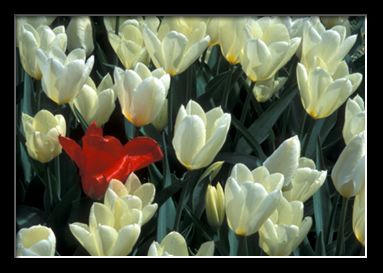
I love tulips. I bought a few recently for a "side piece" which made me think of miniature peonies, a subtle pink and white. Here is what Constance Casey wrote in a piece about tulips: "Tulips are supposed to come back because they're bulbs, which are essentially nice, fat packages of food stored for the future plant. It's not that tulips are finicky, it's that they need the conditions in which they evolved."
Photo by Margret Maria Cordts

Tuesday, February 28, 2006

Tipping Points


Malcolm Gladwell

The picture has nothing to do with M. Gladwell's book. Just a personal tipping point. :) I've been reading Malcolm Gladwell's first book, The Tipping Point: How Little Things Can Make a Big Difference (2000). I bought the book a year or more ago and eagerly read about the first half before it got shuffled in my bedside stack and overrun with others. Something reminded me of it again recently and I unearthed it. This book is really making me think about how we create neural connections in our brain, and why we do what we do with them, or not. I realize more and more how locked in we are in our thinking processes - I have images of a recent Holiday Inn Express ad I saw, in which a clown reassures a rodeo rider straddling the bull and ready to leave the gate - just lean back and hang on. The rider is reassured and gives a nod to the role of the rodeo clowns in keeping it all together, then learns that the clown is a birthday party clown who stayed at a Holiday Inn Express. Find the link or bridge between why I thought of this ad when thinking of how locked in we are to our thinking processes, and you will have entered the Wonderland of my World.

The Tipping Point is indeed a great intellectual adventure story, as M. Gladwell calls it. And I love great intellectual adventure stories. To me all true intellectual explorations are adventures. Studying the difference between internal and external focuses of thinking, and the amazing phenomenon of once we recognize a pattern, the pattern begins to "appear" everywhere we look, validates again the fact that we are reflective beings. Understanding the world around us in a different way than we may have already thought means we have opened our way of understanding ourselves into new pathways. We may not necessarily be conscious of doing this - of deciding to change our thinking - at first, but we feel the excitement of the change, and this prompts us to do it, more and more, and more consciously.

Gladwell has some great case studies in the book. I'm definitely thinking about my own patterns of thinking and doing and feeling, and feeling the urges and surges of starting my own "positive" epidemic, as he writes, is a thrill. Add to that the thrill of the infinite sensory experience we open our minds to as we learn to love these processes of creation, and wow...that's what I call a Big Bang.

A note to think about:
"As human beings, in other words, we can only handle so much information at once. Once we pass a certain boundary, we become overwhelmed. What I'm describing here is an intellectual capacity - our ability to process raw information. But if you think about it, we clearly have a channel capacity for feelings as well." (176)

We have a lot of ways to illustrate how we have defined our environment, based upon our perception. These illustrations can be markers for us to break down some walls, once we know the blueprint of how we built the shelters, buildings, bunkers, skyscrapers, gazebos in our mind.

Quotes and other links:
"Kant had said that it was Nature herself, and not the mathematician, who brings mathematics into natural philosophy." On Growth and Form, D'arcy Wentworth Thompson (1961).

Another book I'm reading:
A novel called The Brief History of the Dead by Kevin Brockmeier.
Inside the flyleaf: 'Remember me when I'm gone' just took on a whole new meaning.

Tuesday, February 14, 2006

The Bare Essentials

photo by John Kane
The Bare EssentialsI read an interesting article in the NYTimes online yesterday, about “naked” and “nude” and dancing. The article is by Gia Kourlas. Check it out. How we feel about flesh and skin. The article conjures up all sorts of images, prompted by both the dancers’ and audience experiences. I appreciate the beauty.


This makes me think of a book I was given recently: Always a Woman, by Kaylan Pickford. "We are vulnerable and are easily led away from our real selves. Illusion beckons." In physical terms, I have never been "pretty," or, particularly "ugly" - I have only thought of these qualities in physical ways when prompted by physical comparisons to others. More often now I think of "pretty" and "ugly" as qualities of character, energy, levels of refinement, finesse, manners, or a lack of them. I have been very ugly at times (remember that Alberta Hunter line about "a horse with a hat on"?) - and have known many levels of these within me, just as I have recognized whole spectrums within others. I've been both clumsy and coordinated, in thinking, speech, and movement. Grace is as grace does, I'm learning, as I age, and remember. On Sunday, in Kathy Oddenino's seminar, "Love as the Secret of Happiness," I thought about all of the energy I have put into my beliefs - about myself, life, others - and how this shows me I have been loyal to my beliefs, even as I struggled with them (and thought this was love), not loyal to or truly loving of myself. Kaylan Pickford wrote, "I love love stories. I think everyone loves a love story, most of all their own."
Here is my bit:
Close as a breath
To the crystal balls
We still want to read
Our past in our futures,
And our present is cloaked, too,
Sometimes simply symbolized.
I see the lines around my eyes
And my skin changing colors-
I no longer simply wonder
So much as smile, marvel
At this divine machine.

The Bare Essentials of Dance

Monday, February 06, 2006

Pleasures

Renee Oldstead

Renee Oldstead (my friend Chris turned my head to Renee a long time ago, with a nod to Eva Cassidy)- I've been listening to her CD, and Summertime, and....Let me just say, you don't know what you're missing. I am loving every note.

Other Arts:
Raoul Dufy (1877-1953).

Since I read his name in something by Gertrude Stein so many years ago, I have been drawn to some of his paintings and patterns. Some yes, some no. He has certain "motifs" that appear in his paintings, as, I think, symbols of what mean so much to him in his internal life. He does this in a way that makes perfect sense to me - i.e., I relate easily to his way, and find I know him much better and easily as I make my way through his paintings. It is like coming to know a friend intimately, without benefit of holding his hand. His uses of lines, and of color, and the particular ways they are "his," are wonderful. If you're not familiar with him and his work, take a look sometime, if only by book. He painted, made costume sets, woodcuts, all sorts of things. There is a lot more "there" than only the graphic-style representations that may be more familiar.

I checked out a book recently from the library and have been perusing these paintings again, the first time for a long while. Note the colors - that exquisite blue, in "Nogent-sure-Marne" (1934). Even in print. They are fascinating studies of character, place, and memory, to me.

My neighbor just knocked on my door to tell me he is the one who knocked my mailbox off last night - ice on the truck windshield. We shook hands, and he apologized in a very gentle voice, offering all. What a nice punctuation to end....